Every day, thousands of public swimming pools across Australia quietly do an energy-hungry job. Pumps run around the clock to keep water clean, warm and safe. It’s work most of us never see. And a bill most of us never think about.
At the Launceston Aquatic Centre, we looked closely at what sits behind the splash. By replacing 13 ageing pool pump motors and their drives with high-efficiency technology, the centre has cut the electricity its pool pumps use by more than half. That’s around 400 MWh of energy and 100 tonnes of carbon emissions saved every year, with operating costs of up to $77,120 saved each year. It also shows what’s possible for local public swimming pools right across the country.
This project has delivered significant operational savings…
City of Launceston
In the video below, Tom Green explains how a federal grant and a first conversation got this project started, why aquatic centres are such a big energy opportunity, and why tapping into the capacity we already have is the key to reaching net zero.
The Hidden Energy Opportunity in the Local Public Swimming Pool
Why Swimming Pools Are the Place to Start
Aquatic centres are energy intensive. For most regional councils, the public swimming pool at an aquatic centre is the most energy-intensive asset they own, which makes it the ideal place to start on the path to net zero.
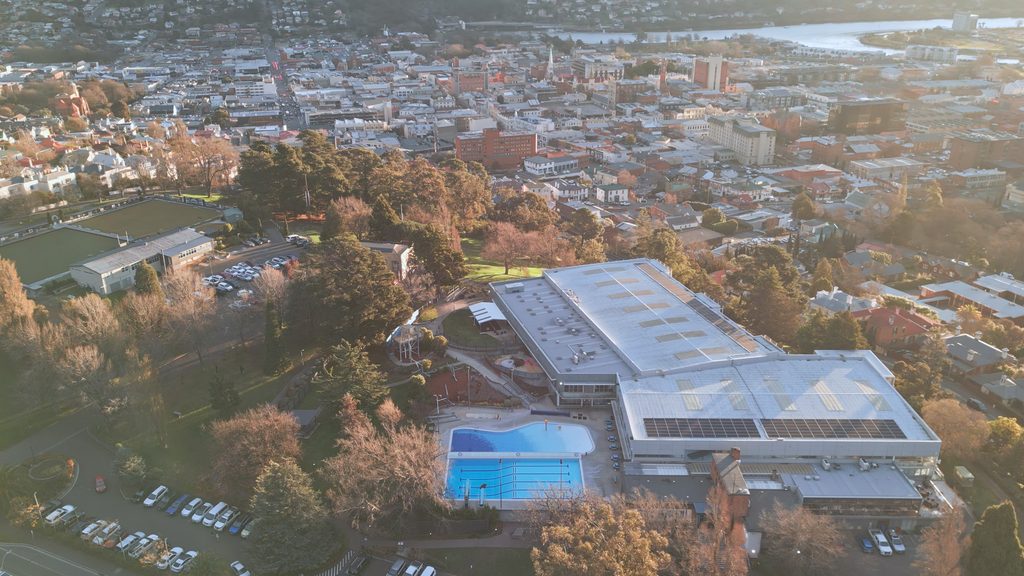
The opportunity is much bigger than one swimming pool. Tasmania alone has 40 public swimming pools, and most still rely on gas heating. Across Australia, public swimming pools represent a significant opportunity to improve energy efficiency. Beyond these, thousands of commercial facilities, including resorts, holiday parks, gyms, swim schools and leisure centres, operate energy-intensive pool systems. Every one of them has pumps, motors and controls that could be working a lot smarter.
How It Started: A Federal Grant and a Conversation
The project began with a conversation. The City of Launceston’s environmental team reached out after learning of a federal grant for energy efficiency gains, the Community Energy Upgrades Fund (CEUF). The fund co-invests in upgrades to local government facilities to reduce energy bills and emissions, and supports Australia’s targets of a 43 per cent emissions reduction by 2030, net zero by 2050 and 82 per cent renewable electricity by 2030.
The Launceston Aquatic Centre is a public-owned asset, and it is the largest consumer of electricity managed by the City of Launceston. The council was already on an electrification journey, having swapped gas boilers for heat pumps in 2021 and then added solar panels in 2022. The grant provided an opportunity to further optimise the centre’s energy performance and establish a best-practice model for other facilities to follow.
In a statement made by City of Launceston, “The Community Energy Upgrade Fund Launceston Aquatic Centre Efficient Electrification Project has helped provide material benefits to consumers by lowering energy costs and CO2 reduction, which provides a more energy efficient centre.” Regarding carbon emissions, the statement also highlights that “results after installation show that the reality will be a much larger amount.” The electrification and energy-efficiency improvements have prevented more than 100 tonnes of carbon annually being released into the atmosphere.
Consult, Design, Deliver
This is where we turn engineering insight into practical outcomes. Every Enginuity Power Solutions project is built on three pillars.
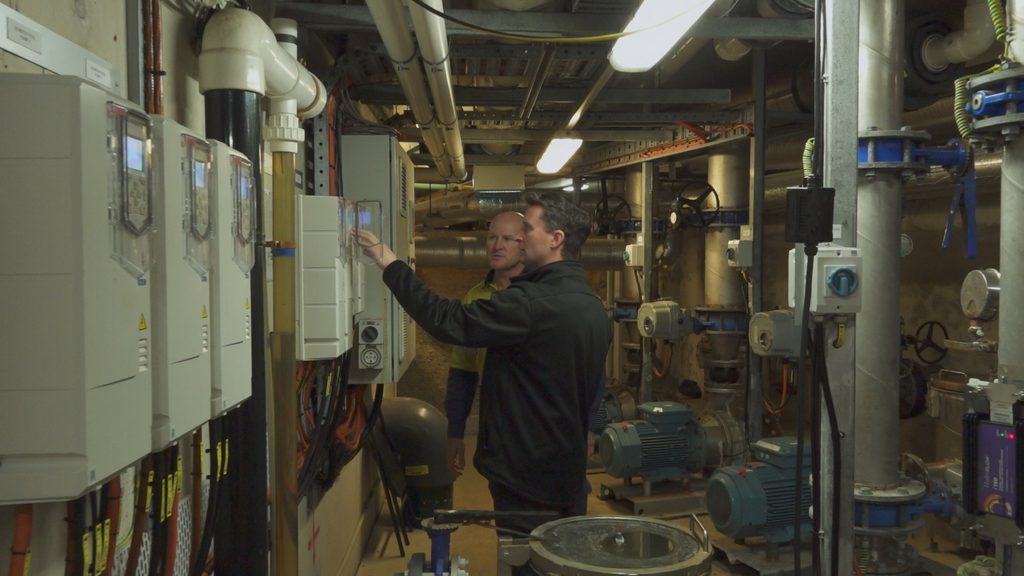
Consult. We started by finding the efficiency opportunities hiding in plain sight. ABB’s energy efficiency appraisal tool lets us quantify the benefits before anything is installed, using simple inputs such as run times, the size and efficiency of existing equipment and the cost per kilowatt hour. It returns the energy saved, the carbon saved and a simple return on investment, which helped build the business case for the grant.
Design. We measured existing pump performance, then designed a solution tailored to each pool’s actual requirements..
Deliver. We led the project from design through to installation, working with the City of Launceston, ABB and A1 Electric Motors, who supplied the motors and drives.
As Tom Green puts it, delivering meaningful energy efficiency is about more than installing new equipment. It starts with understanding how the system operates.
What We Found at the Swimming Pool
The pumps at the Launceston swimming pool were showing their age, and doing more work than they needed to:
- Several systems were moving about 50 per cent more water than Australian standards require, so energy was wasted around the clock.
- Most of the plant was more than 16 years old, with continuous operation contributing to wear, maintenance demands and the risk of unplanned failures.
- The old control system had become unreliable, with outages and difficulty restarting.
- Corrosion in the harsh plant room had left several pumps at the end of their life.
Motor technology has significantly advanced since the Launceston Aquatic Centre was first commissioned. Upgrading the motorised pool pumps and replacing older technology with new would help reduce energy.
The Swimming Pool Upgrade: Smarter Motors and Drives
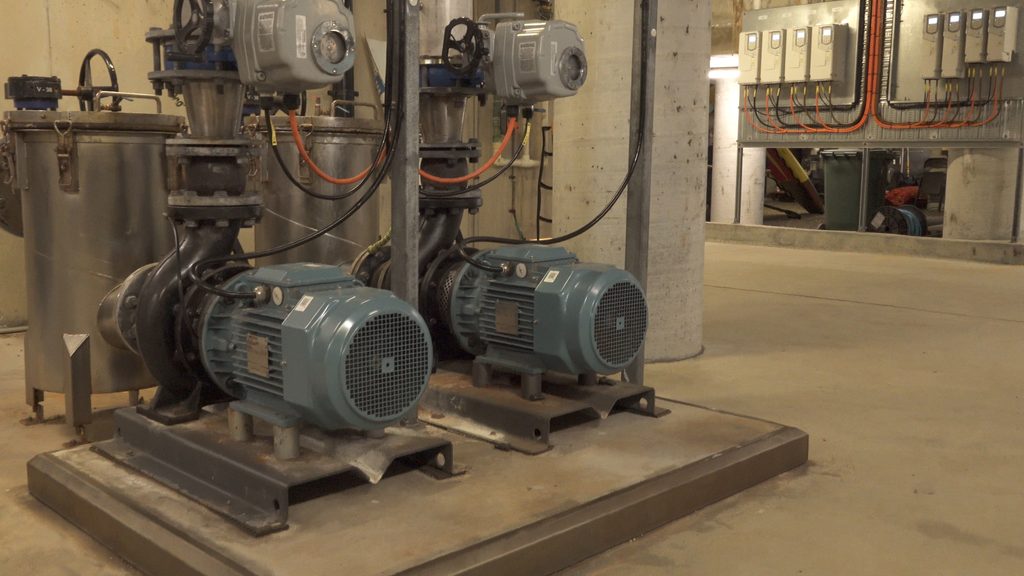
We replaced 13 pool pump motors and their drives with high-efficiency ABB SynRM motors and ACH580 variable speed drives, supplied through A1 Electric Motors, with ABB EC Titanium motors used for smaller applications. Three pumps beyond repair were also replaced, and everything was connected to the centre’s existing building management system, along with the automated valves and chlorine dosing.
A Variable Speed Drive (VSD) adjusts motor speed to match actual system demand, avoiding unnecessary full-speed operation. VSDs can reduce energy consumption by up to 40%, help reduce mechanical wear and extend asset life.
“Projects like this exemplify that meaningful
energy efficiency outcomes surpass simply installing new equipment.“Christopher Probst, ABB Australia
The work was planned around the pools. The new drives went in while the old setup was still running, and motors were swapped one at a time with at least one pump running on every system, to maintain continuous water circulation and filtration. We then fine-tuned the flow using a portable flow meter, to meet the National Construction Code, while retaining backup capacity so each system could remain compliant if one pump was out of service.
The Results
The results demonstrate significant gains in energy efficiency. Measured before and after, the swimming pool pumps now use less than half the electricity and produce less than half the emissions:
| Measure | Before | After |
|---|---|---|
| Annual energy use (pool pumps) | 763,872 kWh | 362,532 kWh |
| Annual carbon emissions | Approx 176 tonnes | Approx 83 tonnes |
| Noise at the Program Pool pumps | 94.7 dB | 77.1 dB |
- Around 400 MWh of energy is saved every year, equivalent to powering 57 Australian homes.
- 100 tonnes of carbon emissions are reduced every year, using the Tasmanian grid.
- Operating costs of up to $77,120 saved each year, from lower energy use and lower network charges.
The original business case forecast savings of 179 MWh and 29 tonnes of carbon a year. The measured results have more than doubled the energy forecast and more than tripled the carbon forecast. With a total project value of around $160,000, the investment is expected to pay for itself in around two years.
Now consider what the same upgrade could achieve in a state with a more emissions-intensive grid. Tasmania has the lowest carbon intensity in the country, at around 230 grams per kilowatt hour. Run the same project in Victoria and the carbon saving would be roughly three times higher.
More Than Energy Savings
- Quieter plant rooms. Every system measured was quieter, with the Program Pool pumps down from 94.7 to 77.1 decibels.
- More reliable. Modern controls replaced an ageing system that had become hard to restart.
- Longer life, easier upkeep. Less wear on equipment, and spare parts are readily available.
The Bigger Picture: Clean Up the Waste
Renewable energy has a vital role to play in Australia’s transition to net zero. But generating cleaner energy is only part of the solution. We also need to tackle the energy wasted by the systems and infrastructure we already have. By improving efficiency and making better use of existing assets, we can reduce energy consumption, cut emissions and lower operating costs. The Launceston Aquatic Centre project shows just how much can be achieved when we focus on eliminating waste.
As Tom Green of Enginuity Power Solutions puts it:
“The waste in industry is immeasurable, and we can’t offset it. We have to clean it up.” Tom Green, Enginuity Power Solutions
Swimming pools are a perfect place to start. The problem is common, the technology is proven, the payback is short, and federal grants like the CEUF can help co-fund the work. Grant funding works best when it delivers results you can measure. At Launceston, the up front modelling shaped the business case and the grant application, and the results measured since have confirmed it and surpassed it. If we shift our thinking and drive this change nationally, and then globally, just imagine the results.
Could your public swimming pool be next?
We’re grateful for the partnership between the City of Launceston, ABB and A1 Electric Motors for their trust and collaboration on this project. To understand more of the electric motors and drive technology, read ABB’s article that explores this story further.
Could your commercial pool facility be operating more efficiently? Discover what a detailed assessment could reveal about your energy use, wastage and potential savings. It all starts with a conversation. Contact Enginuity Power Solutions today or call (03) 6709 8070.
Want to see more of our energy efficiency and optimisation work? Read Creating Resilience Through High Voltage Asset Performance.